Childhood Trauma, Dissociation, and Neurodivergence: New Evidence from Clinical Samples
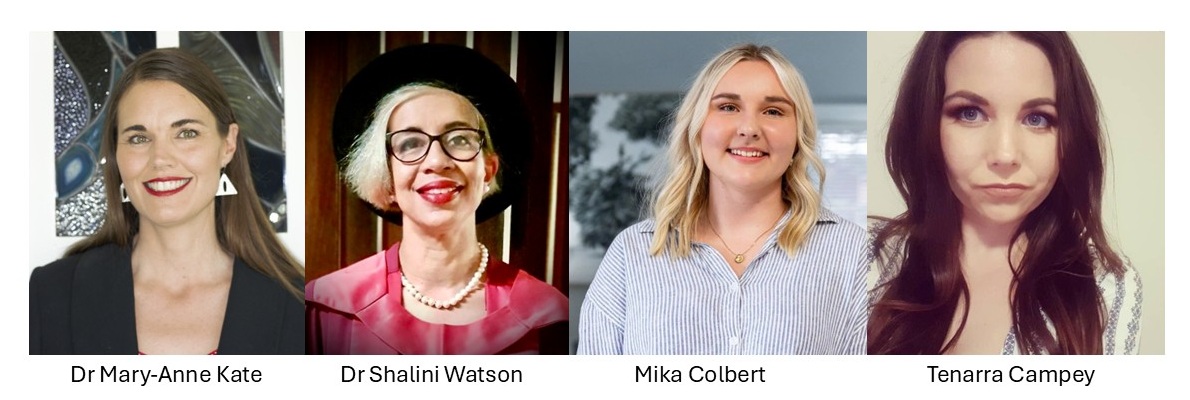
with Dr Mary-Anne Kate, Dr Shalini Watson, Tenarra Campey & Mika Colbert
13 June 2026 | 9.30am – 11.30am AEST
This workshop presents emerging research on trauma, dissociation, and neurodiversity. It draws from Dr Mary-Anne Kate’s research program, conducted in collaboration with Dr David Hegarty and Dr Ben Buchanan from NovoPsych, whose platform supplies the de-identified clinical data and whose psychometric expertise informs the conceptual and methodological design of the research. The program examines how childhood adversity and dissociation shape neurodivergent expression in autism and ADHD, and how these mechanisms complicate diagnosis and treatment in trauma-exposed clients.
Analyses from a large clinical dataset (Mika Colbert, co-supervised by Dr Jess Gillies and Dr Mary-Anne Kate) found that emotional and sexual abuse, neglect, and household mental illness predicted elevated autistic traits, particularly among gender-diverse and female clients. These findings suggest that early relational trauma may influence both the expression and clinical recognition of autism. Dr Kate will also present findings from Clinical Evidence for Increased Dissociative Experiences in Adults with High Levels of Autistic Traits led by Katherine Reuben, which found that dissociation was substantially more prevalent among adults with high autistic traits than among those with low traits, with the strongest differences in memory disturbance, self-confusion, and depersonalisation. Together, these studies identify dissociation as both a trauma-related and sensory-cognitive process that may underlie complexity in autistic presentations.
Building on this foundation, Tenarra Campey’s honours research investigates the relationship between dissociation and camouflaging behaviours in individuals with high autistic traits. Preliminary analyses suggest that higher levels of camouflaging co-occur with increased dissociative symptoms, particularly among women and gender-diverse adults, highlighting the psychological cost of sustained masking and the potential for identity fragmentation as an adaptive response to social and sensory demands.
Dr Shalini Watson’s honours research extends these findings to ADHD. Using data from 1,409 adults, her study examined dissociation as a mediator between adverse childhood experiences (ACEs) and ADHD symptomatology. Results showed that dissociation, rather than trauma exposure alone, most strongly predicted ADHD subtypes, with odds ratios ranging from 2.0 to 12.6, and that dissociation moderates the relationship between ACEs and ADHD traits.
Across this integrated body of research, dissociation emerges as a central mechanism linking early adversity and neurodivergent presentation.
Learning Objectives:
-
Identify associations between childhood trauma, dissociation, and neurodivergent presentations (autism and ADHD) in clinical populations.
-
Describe the relationship between autism and dissociation, including how dissociative processes may contribute to complexity in autistic presentations.
-
Explain how camouflaging or masking behaviours relate to dissociation and psychological distress among individuals with high autistic traits.
-
Analyse how dissociation mediates the relationship between adverse childhood experiences (ACEs) and ADHD symptomatology.
Registration:
Super Saver Price: Individual $AUD110 | Groups 3+ $AUD100 Until 1 May 2026
Early Bird Price: Individual $AUD120 | Groups 3+ $AUD110 Until 29 May 2026
Standard Price: Individual $AUD130 | Group 3+ $AUD120
Student Price: $AUD80
Website: Childhood Trauma, Dissociation, and Neurodivergence: New Evidence from Clinical Samples